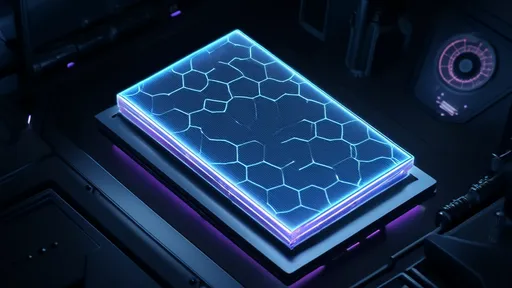
In the rapidly evolving field of quantum computing, researchers are constantly searching for platforms that can overcome the limitations of current technologies. Among the most promising candidates are topological photonic chips, which leverage the unique properties of light and topological physics to enable robust and scalable quantum information processing. Unlike traditional quantum systems that rely on fragile qubits, these chips exploit the inherent stability of topological states, offering a potential pathway to fault-tolerant quantum computation.
The concept of topological photonics emerged from the broader field of topological insulators, where materials exhibit conducting surface states while remaining insulating in their bulk. When applied to photonics, this principle allows for the creation of waveguides and cavities that are immune to scattering and fabrication imperfections. This robustness is particularly valuable in quantum computing, where even minor disturbances can lead to decoherence and errors. By confining and manipulating photons within these protected modes, scientists can perform quantum operations with unprecedented reliability.
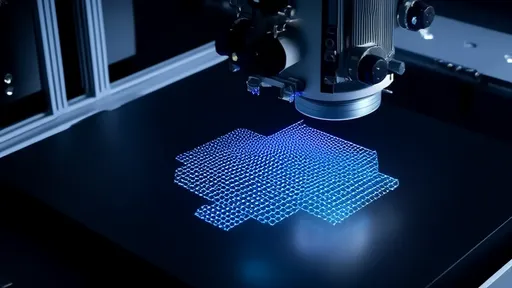
Recent breakthroughs in nanofabrication have made it possible to engineer photonic crystals and metamaterials with precisely controlled topological properties. These structures can guide light along their edges without backscattering, even when encountering sharp bends or defects. Such characteristics are ideal for creating complex optical circuits that form the backbone of a quantum processor. Moreover, the ability to integrate single-photon sources and detectors directly onto these chips paves the way for fully integrated quantum photonic systems.
One of the most exciting aspects of topological photonic chips is their compatibility with existing semiconductor manufacturing techniques. This means they could potentially be produced at scale using processes similar to those employed in the electronics industry. As a result, the path from laboratory prototypes to practical devices may be shorter than for other quantum computing platforms. Several research groups and startups are already exploring commercial applications, with some predicting functional quantum processors based on this technology within the next decade.
Beyond quantum computing, topological photonic chips are finding applications in classical optical communications and sensing. Their ability to transport light efficiently in challenging environments could lead to improvements in fiber-optic networks and optical interconnects for data centers. However, it is in the realm of quantum information science where their impact is expected to be most transformative. By providing a stable and controllable medium for quantum states, these chips address one of the fundamental challenges in building practical quantum computers.
As research progresses, scientists are discovering new ways to harness topological effects for quantum advantage. Recent experiments have demonstrated entanglement generation and quantum gate operations using topological photonic structures. These achievements suggest that the marriage of topology and photonics could indeed produce the next generation of quantum computing architectures. While significant challenges remain, particularly in improving photon-photon interaction strengths, the field is advancing at a remarkable pace.
The development of topological photonic chips represents a convergence of multiple disciplines, from quantum optics to materials science and nanofabrication. This interdisciplinary approach has led to creative solutions that might not have emerged within traditional research silos. As funding agencies and technology companies increasingly recognize the potential of this platform, investment in the field continues to grow, accelerating both fundamental discoveries and practical implementations.
Looking ahead, the quest to build a topological quantum photonic processor will likely drive innovations across the entire quantum technology ecosystem. From novel light sources to advanced detection schemes, each component must be optimized to work within this new paradigm. The ultimate goal is a chip-based system that can outperform classical computers for specific tasks while being manufacturable at scale. If successful, topological photonic chips could become the foundation for a new era of quantum-enabled technologies.
While still in its relative infancy compared to other quantum computing approaches, topological photonics has already demonstrated capabilities that set it apart. The combination of inherent error protection, potential for miniaturization, and compatibility with existing fabrication methods makes this platform uniquely positioned to address the challenges of building practical quantum devices. As research teams worldwide continue to push the boundaries of what's possible with these systems, the vision of accessible, large-scale quantum computing grows increasingly tangible.

By /Jul 28, 2025

By /Jul 28, 2025

By /Jul 28, 2025

By /Jul 28, 2025

By /Jul 28, 2025

By /Jul 28, 2025

By /Jul 28, 2025

By /Jul 28, 2025
By /Jul 28, 2025

By /Jul 28, 2025

By /Jul 28, 2025

By /Jul 28, 2025

By /Jul 28, 2025

By /Jul 28, 2025
By /Jul 28, 2025

By /Jul 28, 2025

By /Jul 28, 2025

By /Jul 28, 2025

By /Jul 28, 2025

By /Jul 28, 2025
