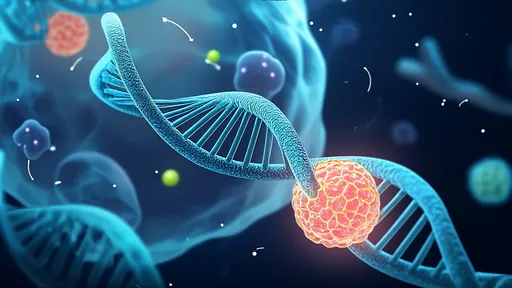
In the rapidly evolving field of nanotechnology, DNA nanodevices have emerged as powerful tools for probing and manipulating biological systems at the molecular level. Among these, the DNA nanoclamp stands out as a groundbreaking innovation capable of precisely controlling proteins within living cells. This molecular-scale tool, constructed from synthetic DNA strands, offers unprecedented opportunities for studying cellular processes, developing targeted therapies, and advancing synthetic biology.
The concept of DNA nanodevices isn’t entirely new, but the development of functional tools that operate inside living cells has long been a challenge. Traditional methods for protein manipulation often rely on genetic engineering or chemical inhibitors, which lack spatial and temporal precision. The DNA nanoclamp, however, functions like a pair of molecular tweezers, capable of binding to specific proteins and modulating their activity with remarkable accuracy. Its programmable nature allows researchers to design clamps that respond to specific cellular signals, enabling real-time control over biological processes.
What makes the DNA nanoclamp particularly revolutionary is its ability to operate in the complex environment of a living cell. Unlike in vitro systems, where conditions can be carefully controlled, intracellular environments are crowded, dynamic, and often hostile to synthetic structures. The nanoclamp’s design incorporates features that enhance stability and specificity, such as optimized nucleotide sequences and protective modifications that resist degradation by cellular enzymes. This ensures that the device remains functional long enough to carry out its intended tasks without disrupting normal cellular functions.
Recent studies have demonstrated the nanoclamp’s potential in various applications. For instance, researchers have used it to sequester specific proteins, effectively inhibiting their activity without affecting other cellular components. This approach could be invaluable in studying signaling pathways or in developing therapies for diseases caused by protein misfolding or overexpression. In one striking example, scientists deployed DNA nanoclamps to modulate the activity of transcription factors, altering gene expression patterns in a controlled manner. Such precision could pave the way for new treatments for genetic disorders or cancers driven by aberrant gene regulation.
Beyond basic research and therapeutics, the DNA nanoclamp holds promise for bioengineering and synthetic biology. By enabling precise control over protein interactions, it could facilitate the construction of artificial cellular circuits or the engineering of cells with novel functions. Imagine programming immune cells to respond more aggressively to tumors or designing microbial factories that produce complex biomolecules on demand. The nanoclamp’s versatility makes it a key enabler of these futuristic scenarios.
Despite its immense potential, the DNA nanoclamp is not without challenges. Delivery into cells remains a hurdle, as the device must cross the cell membrane without triggering immune responses or causing toxicity. Researchers are exploring various strategies, such as lipid-based nanoparticles or cell-penetrating peptides, to shuttle the nanoclamp into target cells efficiently. Another concern is the potential for off-target effects, where the device might interact with unintended proteins. Advances in computational modeling and high-throughput screening are helping to minimize these risks by improving the design specificity of DNA nanodevices.
Ethical considerations also accompany the development of such powerful tools. The ability to manipulate cellular processes with such precision raises questions about unintended consequences and long-term effects. Regulatory frameworks will need to evolve alongside the technology to ensure its safe and responsible use, particularly in clinical applications. Nevertheless, the scientific community remains optimistic about the transformative potential of DNA nanoclamps, provided these challenges are addressed thoughtfully.
Looking ahead, the integration of DNA nanoclamps with other emerging technologies could unlock even greater possibilities. Combining them with CRISPR-based systems, for example, might allow for simultaneous control of gene editing and protein activity, offering a multi-pronged approach to genetic engineering. Similarly, pairing nanoclamps with advanced imaging techniques could provide real-time visualization of protein dynamics in living cells, shedding light on previously inaccessible aspects of cellular biology.
The journey from laboratory curiosity to mainstream tool is still underway, but the progress so far is undeniably exciting. As researchers refine the design, delivery, and control mechanisms of DNA nanoclamps, these molecular devices are poised to become indispensable tools in the life sciences. Whether unraveling the complexities of cellular behavior or crafting next-generation therapies, the DNA nanoclamp represents a bold step toward mastering the molecular machinery of life.

By /Jul 28, 2025
By /Jul 28, 2025

By /Jul 28, 2025

By /Jul 28, 2025

By /Jul 28, 2025

By /Jul 28, 2025

By /Jul 28, 2025
By /Jul 28, 2025
By /Jul 28, 2025

By /Jul 28, 2025
By /Jul 28, 2025

By /Jul 28, 2025

By /Jul 28, 2025

By /Jul 28, 2025

By /Jul 28, 2025

By /Jul 28, 2025
By /Jul 28, 2025
By /Jul 28, 2025
By /Jul 28, 2025

By /Jul 28, 2025
