The integration of blockchain technology into scientific research has opened up new possibilities for ensuring transparency, accountability, and trust in the experimental process. One of the most promising applications is the concept of full-cycle traceability, where every stage of an experiment—from hypothesis formulation to data collection and analysis—is securely recorded on an immutable ledger. This approach not only enhances the credibility of research but also addresses longstanding issues such as data tampering, reproducibility crises, and intellectual property disputes.
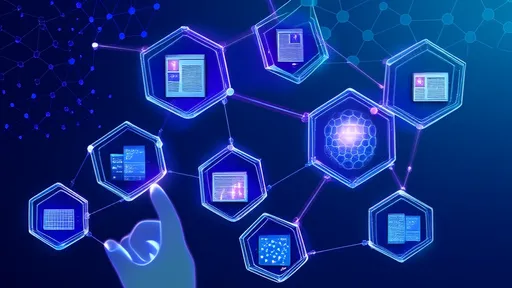
At the heart of this innovation lies the ability of blockchain to create a tamper-proof audit trail. Unlike traditional lab notebooks or digital storage systems, which can be altered or deleted without leaving traces, blockchain entries are permanent and timestamped. Each action taken during an experiment, whether it's adjusting parameters or recording observations, is cryptographically hashed and linked to previous entries. This creates a chronological chain of custody that can be independently verified by peers, funding agencies, or regulatory bodies.
The implications for research integrity are profound. Consider the growing concern over irreproducible studies in fields like psychology and biomedicine. With blockchain-based traceability, other scientists can precisely reconstruct experimental conditions by accessing the complete history of methodology, equipment calibrations, and raw data. This level of detail goes far beyond what's typically included in published methods sections, potentially saving months of failed replication attempts and wasted resources.
Funding organizations are particularly interested in this technology as a means to verify proper use of research grants. By tracking equipment purchases, reagent usage, and personnel time allocation on the blockchain, they gain unprecedented visibility into how their investments are being utilized. This could revolutionize accountability in publicly-funded science while reducing administrative burdens associated with traditional compliance reporting.
Intellectual property management represents another area where blockchain traceability shines. The precise timestamping of discoveries creates an indisputable record of priority in innovation, which could prevent costly patent disputes. Research institutions are exploring how to integrate these systems with their technology transfer offices, ensuring that inventors receive proper credit while maintaining confidentiality until formal protections are filed.
Implementation challenges remain, particularly regarding data storage limitations on most blockchain networks. While cryptographic hashes of large datasets can be stored on-chain, the raw data itself often requires off-chain solutions with careful consideration of accessibility and preservation. Some projects are experimenting with decentralized storage networks that maintain the same security guarantees as the blockchain itself while accommodating the massive datasets common in modern research.
The human factor presents another hurdle. Researchers accustomed to traditional workflows may resist adopting what they perceive as cumbersome new systems. Successful implementations will need to demonstrate clear value propositions—such as automated compliance reporting or streamlined collaboration tools—while minimizing disruption to creative scientific processes. Pilot programs at several universities have shown that user-friendly interfaces significantly increase adoption rates among less tech-savvy researchers.
Looking ahead, the convergence of blockchain with other emerging technologies could unlock even greater potential. Smart contracts might automate aspects of peer review by triggering payments or recognition when predefined research milestones are verifiably achieved. Artificial intelligence systems could analyze the growing corpus of blockchain-verified research to identify patterns or suggest methodological improvements. The combination of these technologies points toward a future where scientific knowledge accumulates with unprecedented reliability and efficiency.
Ethical considerations must keep pace with these technical developments. While transparency is generally desirable in science, certain types of research—particularly involving human subjects or national security concerns—require careful balancing of openness with privacy protections. Blockchain systems designed for research will need sophisticated permission structures that allow for selective disclosure of information to appropriate parties while maintaining overall system integrity.
The movement toward blockchain-based research traceability reflects a broader cultural shift in science toward openness and reproducibility. As the technology matures and overcomes current limitations, it has the potential to become as fundamental to the research infrastructure as peer review or institutional review boards. The scientific community's willingness to experiment with these tools today will shape the standards of research integrity for decades to come.

By /Jul 28, 2025

By /Jul 28, 2025

By /Jul 28, 2025

By /Jul 28, 2025

By /Jul 28, 2025

By /Jul 28, 2025

By /Jul 28, 2025

By /Jul 28, 2025
By /Jul 28, 2025

By /Jul 28, 2025

By /Jul 28, 2025
By /Jul 28, 2025

By /Jul 28, 2025

By /Jul 28, 2025

By /Jul 28, 2025

By /Jul 28, 2025

By /Jul 28, 2025
By /Jul 28, 2025

By /Jul 28, 2025

By /Jul 28, 2025
